Marketers, Stop Picking Cute Side Hustles

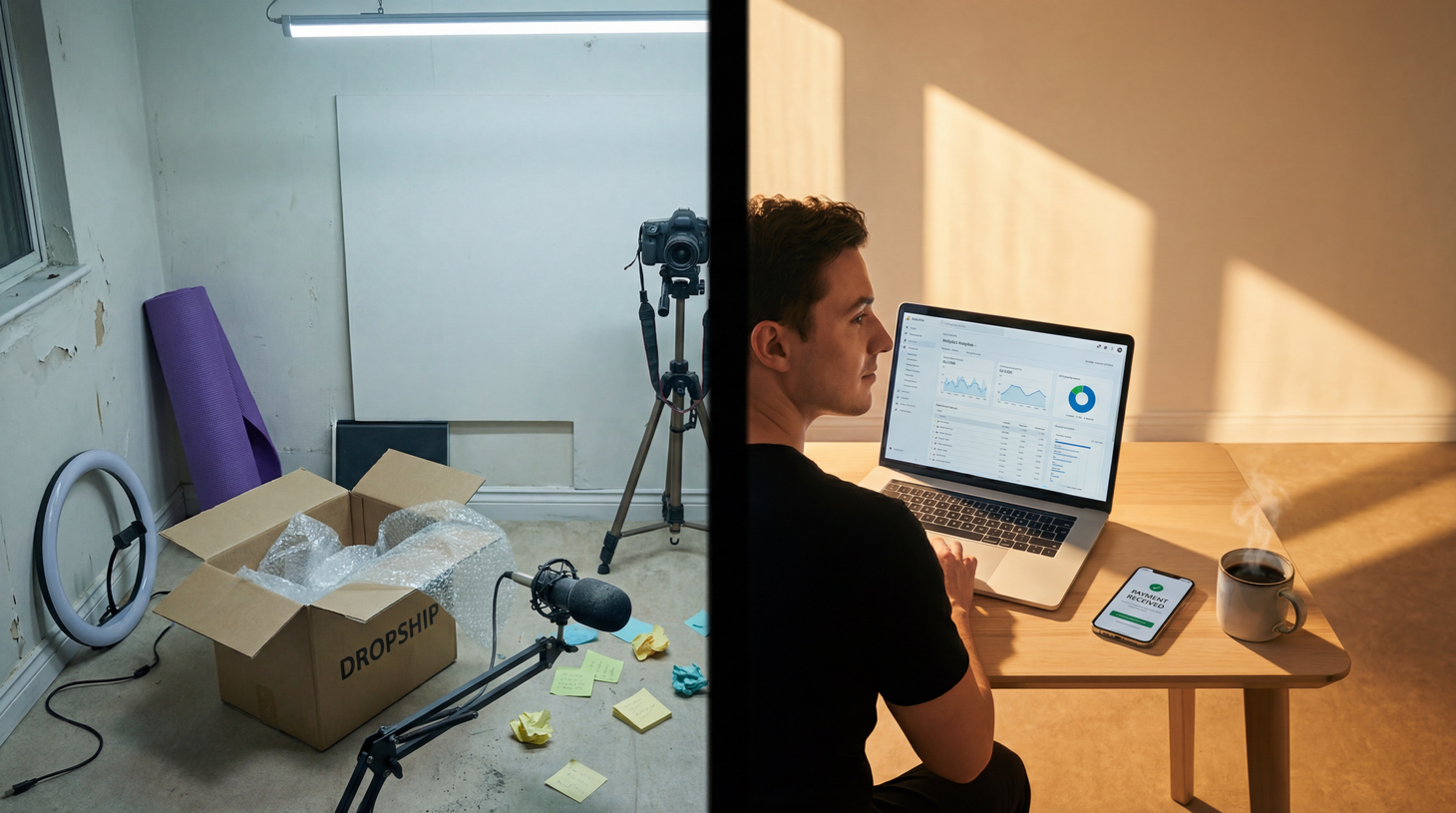
Table of Contents
My first client paid me $7,000 a month.
At Mindvalley, where I was Head of Performance Marketing, I was making about $50 an hour.
I did the math. That $7,000 retainer, for maybe 15-20 hours of actual work per month, came out to way more per hour than my full-time job. And I landed that client right after I finished serving my notice.
I didn't learn a new skill. I didn't pivot into a new industry. I didn't "follow my passion."
I just did more of what I was already doing.
That's the unsexy truth about side hustles that actually make money. And it's the opposite of what most people do.
The Problem With "Cute" Side Hustles
Everyone has a side hustle now. Most of them picked the wrong one.
They picked "cute" side hustles. The kind that sounds impressive at dinner parties but doesn't actually pay.
Things like:
- Becoming a life coach in your 20s when you haven't figured out your own life yet
- Building a personal brand when you have nothing to sell yet
- Launching a dropshipping store on the side when you know nothing about e-commerce
These aren't side hustles. These are expensive hobbies disguised as business ideas.
So why do smart people keep falling for them?
Why Smart People Pick Dumb Side Hustles
Because they're not thinking. They're feeling.
Someone hates their job. They're burned out. They want out.
So when they think about side hustles, they don't think rationally. They think emotionally. They look for the opposite of what they're doing now.
"I hate my corporate marketing job, so I'll become a yoga instructor."
"I'm tired of spreadsheets, so I'll start a podcast about true crime."
"I'm bored at work, so I'll finally pursue my passion for watercolor painting."
“I’m not making enough money as a marketer. Let’s create an app to make passive income.”
The logic feels sound: "If I have to work hard anyway, I might as well work hard on something I love."
But that logic is broken. And here's why.
Work Is Painful. Period.
Because no matter what you pick, the pain shows up. It doesn't matter if you're passionate about it.
When you turn something into a business, you will eventually hate parts of it. The admin. The difficult clients. The inconsistency. The pressure to perform when you don't feel like it.
Even if you love photography, you'll hate editing your 500th wedding photo at 2am.
Even if you love podcasting, you'll hate recording episodes at 4am because that's the only time your guest can do it.
The new thing only looks better because you haven't experienced the pain of doing it yet. Once you do, you'll find new things to hate.
The pain doesn't go away just because you picked something you're "passionate" about.
Mark Manson, the author of The Subtle Art of Not Giving a F*ck, put it best:
The question is not what do I want to enjoy? The question is what pain am I willing to sustain?
So if you're going to suffer anyway, why not suffer doing something that's already proven to make money?
Let me show you what the numbers actually look like when you stop chasing novelty and double down on what you already do.
The Math Your Employer Doesn't Want You to See
Let's say you're a marketer making $80,000 a year.
That's about $38 an hour, assuming you work 40 hours a week, 52 weeks a year.
Now here's what most people don't realize:
If you take on side work at that same $38/hour rate for just 10 extra hours a week, you'd make an additional $20,000 a year.
But it gets better.
Clients typically pay 25% to 100% more than your employer does. Why? Because they pay you for the results you get for them. When you're a contractor, you're not sitting in meetings all day. You're not doing "team culture activities." You're not pretending to look busy. You're doing actual work that generates results.
At a 50% premium, that same 10 hours a week becomes $30,000 a year in extra income.
That's a 37% raise. From 10 hours a week. Doing what you already know how to do.
The math is obvious. So why don't more people do this?
Because they're stuck in the wrong mindset.
The Identity Shift That Changes Everything
Most people think: "I'm an employee who happens to have skills."
That's the wrong frame.
The right frame is: "I'm a business that happens to have a job."
When you see yourself as a business, everything changes. You start thinking about your hourly rate. You start noticing how much of your workday is wasted on non-revenue activities. You start asking: "What's the highest and best use of my time?"
And when you realize there's a better use of your most productive hours, and that use pays more per hour than your job, the decision becomes obvious.
That's exactly what happened to me.
How I Built My Agency
When I was at Mindvalley, I wasn't looking for an exit. I focused on becoming the best media buyer I could be, learning everything about direct response marketing, and building relationships with marketers and business owners around the world.
Over the years, I managed millions in ad spend across Meta, YouTube and Google. That experience became my proof.
When I finally decided to leave, I didn't pivot into something new. I reached out to the people I already knew and offered to do what I was already doing: running ads.
Two clients. That's all it took to replace my full-time income + incentives.
And here's the thing: I was working fewer hours with these clients. Because when you work with clients, you're not sitting in 1-hour meetings about the meeting you're going to have next week. You're doing the work.
If you want to do the same thing, here's the playbook.
The Three-Step Income Ladder
Step 1: Do more of what you're already doing.
Find one or two clients who will pay you to do the same thing you do at your day job. Don't overthink it. Just get started.
Step 2: Charge more for it.
Once you have clients, you'll realize not everyone pays the same rate. Some people will happily pay double what others pay. Raise your prices. Let the market tell you what you're worth.
Step 3: Scale or productize.
When you're maxed out on time, you have two options:
- Hire people to help with delivery so you can take on more clients
- Package your expertise into a product (templates, courses, consulting frameworks) so you can sell without trading time
That's it. No fancy funnels. No viral content strategy. No hoping the algorithm blesses you.
"But What About Building a Personal Brand?"
I get it. Everyone says you need one. And I'm not going to tell you they're wrong.
Here's why that's a trap.
I tried it myself. When Casey Neistat blew up, I started daily vlogging. Then I switched to daily live streams. Then I tried doing mukbang videos on YouTube.
None of it worked.
Why? Because I had no clear path to making money from any of it. I was just creating content, hoping something would stick, hoping the audience would come, hoping I'd figure out monetization later.
That's not a side hustle. That's a second unpaid job.
The Better Way to Build a Personal Brand
Here's what actually works: Build your side hustle first. Then document it.
Start with a service that pays. Get clients. Deliver results.
Then start posting about what you're doing. Share the lessons. Talk about the wins and the losses. Document the journey.
Now your personal brand has something to talk about. And the content you create actually drives business because it's proof of your expertise.
That's what happened with my agency. I didn't build a following first. I built a reputation. I delivered results for clients. Those clients came back. They referred others. The brand or my name grew from the work, not the other way around.
The brand feeds the business. The business funds the brand. They grow together.
But there's a window for this, and it doesn't stay open forever.
Why This Matters More When You're Young
When you're young, you have three things that disappear over time:
- Energy. You can work 60 hours a week without breaking.
- Mental capacity. You can learn fast and adapt.
- No commitments. No kids, no mortgage, no one depending on your stability.
This is the window to take risks. This is the window to maximize income.
Because money unlocks things:
- Lifestyle. You can afford to eat well, stay healthy, take care of your body.
- Freedom. You can craft your schedule around your energy and preferences, not someone else's.
- Options. You can decide when to travel, whether to build a team or stay solo, what kind of life you want to live.
The best time to stack cash is when you have the least to lose.
The Bottom Line
If you want to make more money, stop looking for the perfect side hustle.
Stop chasing passion projects that have no market demand.
Stop building audiences before you have something to sell.
Instead, do more of what you're already doing. Charge more for it. Scale when you're ready.
It's not sexy. But it works.
Here's your question: What skill are you already getting paid for that you've been ignoring? That's probably where your next $20K is hiding.

Built for marketers who want more than a paycheck
Every 2 weeks, one email breaking down the systems I use to earn more, work less, and actually enjoy my life. Just what worked, what didn't, and what I'm still figuring out.
No spam, ever. Unsubscribe at any time.